Uncategorized
WHY GRILLING BRINGS JEWISH MEN TOGETHER: A JEWISH TRADITION OF FIRE AND FELLOWSHIP
Jun
By Steven Mandel MD
When Jonathan and his wife Sarah, moved to a new city, they looked for a Conservative Synagogue with a Men’s Club and Sisterhood. Sponsored by the FJMC Men’s Club, they decided to attend the BBQ. What started as a simple afternoon at a BBQ, quickly helped Jonathan put names to faces, make new friends, and found a welcoming Jewish community for his family. Sarah brought their 2 children, with dishes to share, and were immediately greeted with smiles and conversation. The children found other kids to play. By the end of the BBQ, they no longer felt like newcomers in a new city-they felt like they belonged.
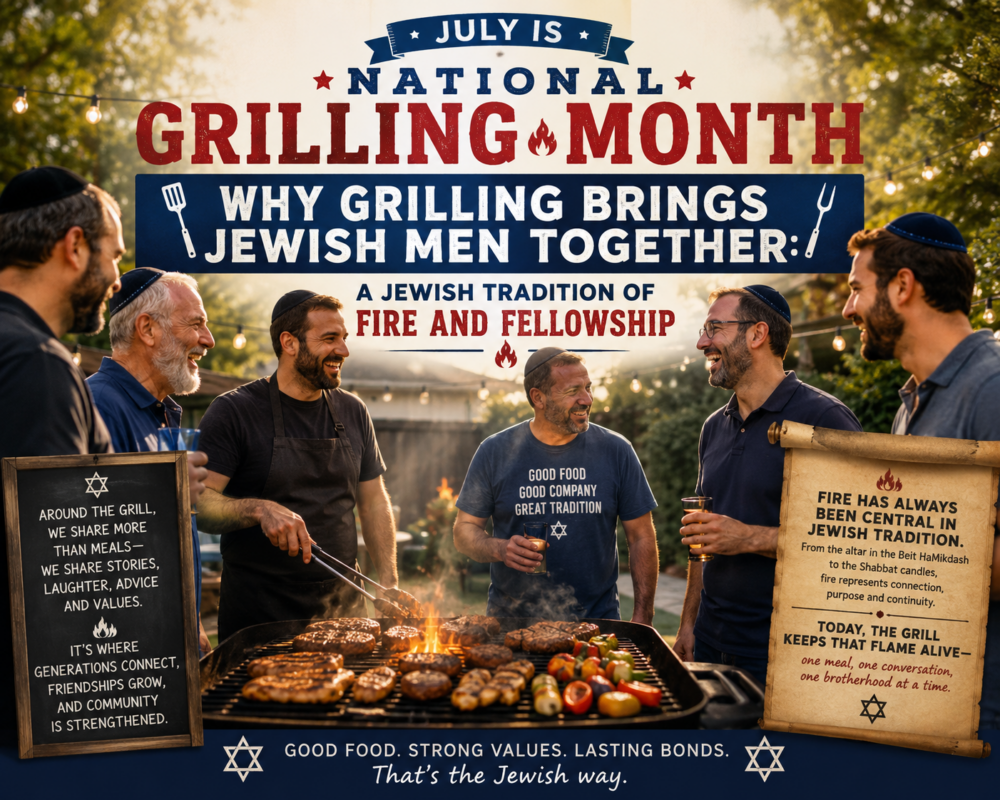
July is national Grilling Month offers a uniquely Jewish opportunity to celebrate food, tradition, family and community. Grilling reminds men that leadership is not always formal or public. Grilling brings people together, creates a welcoming space, strengthens family bonds, mentoring younger generations, and making sure no one feels alone.
Grilling brings on: hands on bonding, low pressure socializing, intergenerational connection and a gateway for newcomers. There is shared storytelling and responsibility, and pride in Jewish identity when tied to holidays and community events. Fort he FJMC, it is a time to attract new members, strengthen existing bonds, and support synagogue life. It’s a pathway for GESHER – bridge between generations, between families, and for men looking for community. Jewish culture creates special importance of eating together. When people gather and share words of meaning around a meal, the gathering becomes spiritually elevated. It becomes an expression of Jewish values and belonging.
Barbeque as a Jewish tradition takes two distinct forms: the Ashkenazi tradition of slow smoked beef brisket, and the modern Israeli practice of cooking skewers over an open flame, known as mangal or ha-esh(on the fire). Both honor Jewish dietary laws ( kashrut) while adopting regional smoking and grilling methods.
In the United States, grilling surged in popularity after World War 2, when backyard culture blossomed. In the 1950s, the charcoal kettle grill became a symbol of family life and neighborhood connection. Today, grilling language spoken in countless styles – from Argentina assado, to Korean bulgogi, to Israel al ha’esh. In Israel the grill focuses on skewed meats like parigot ( chicken thighs), kebabs, and merguez sausage. They are served with humas, tahini, and charred vegetables like eggplant.
It connects to the following Jewish themes:
Community (Kehilla) – friendship and fellowship
Welcoming guests (hachbasat orchim) – Jewish obligation to include and
care for others
Joy (simcha) – celebration and holiness in everyday life .
Tradition (l’dor v’dor) – stories and recipes from one generation to the next
Responsibility (bal-taskchit) reducing waste and respecting the environment
Tikkun Olam – Repairing the World- a time for collecting food, taing funds for a food pantry, and for charitable causes.
Combat isolation – retirement, relocation, and life changes.
In Israel, on Yom Ha’atzmaut is more than grilling food, the “mangal” – the outdoor barbeque is a strong symbol of national celebration, family, freedom and togetherness. In Israel the BBQ reflects freedom and independence, family and community connection, Following Yom HaZikaron, the BBQ symbolizes, life continuing, resilience, gratitude, and rebuilding of joy and sacrifice. By people contributing something, it demonstrates a collective responsibility and belonging and hope for the future.
The FJMC BBQ creates warmth, openness, laughter and human connection. People who may feel isolated with conversations, may then feel connected. There is bonding, shared rituals symbolizing continuity, identity and security. There is the formation of “collective memory” that shapes how we understood things in the past and how to make memories in the future. New members feel welcomed and families feel included. Children bring community and warmth showing the opportunity for learning how to continue this tradition.
Modern life leaves men socially isolated. Work demands, family responsibility, and technology can reduce interactions for face-to- face interactions. A BBQ creates a relaxed environment where conversations can occur naturally. Men who are reluctant to discuss personal challenges in a formal setting find it easier in an informal setting. With the shared participation in the BBQ, it brings up the beautiful Jewish lesson: Communities thrive when everyone contributes. Many of our cherished memories are connected to meals shared with families and friends. Relationships are frequently strengthened by simple experiences: sharing a meal, telling a story offering a healthy hand or standing together around a grill on a summer afternoon. Beyond tending the fire of the flame, we are tending the bonds of friendship, family and community.
A family BBQ can be of psychological value when there has been tensions, distance and conflict among family members or friends, through shared activities, food, laughter and simple presence, allows people to come together, reduces defensiveness, and creates moments of normalcy and familiarly, and rebuilding trust. This goes along with the FJMC to create welcoming, non-judgmental spaces where people connect naturally.
Just as a grill brings people together around its warmth, so does Jewish brotherhood strengthen our communities through friendship, tradition and shared purpose.

Steven Mandel MD, VP Outreach and Engagement, NY Metro FJMC