
Uncategorized
The Holiness of the First Time
Apr
By Jonathan Brody
On Sunday, April 26th, I ran my first-ever 13.1 miles, a half-marathon. I haven’t even run 10 miles; the most I’ve run is 8.14, on April 12th, 3 weeks ago.
There’s a pattern in the Torah that’s easy to miss but huge once you see it: Every time the Jewish people do something for the first time, Hashem meets them there with extra strength.
The first step into the Red Sea — only after they stepped did the waters split.
The first time Avraham said “Lech Lecha,” he didn’t know the destination, but he moved anyway.
The first time Bnei Yisrael ate the manna, they had no idea what it was, but they trusted it would sustain them.
The first time we built the Mishkan, nobody had ever built a holy space before, but their hearts carried them.
In Judaism, the first time isn’t the scariest moment. It’s the holiest.
Why?
Because the first time is when you don’t have proof yet.
You don’t have experience yet.
You don’t have certainty yet.
All you have is courage.
And Hashem loves courage.
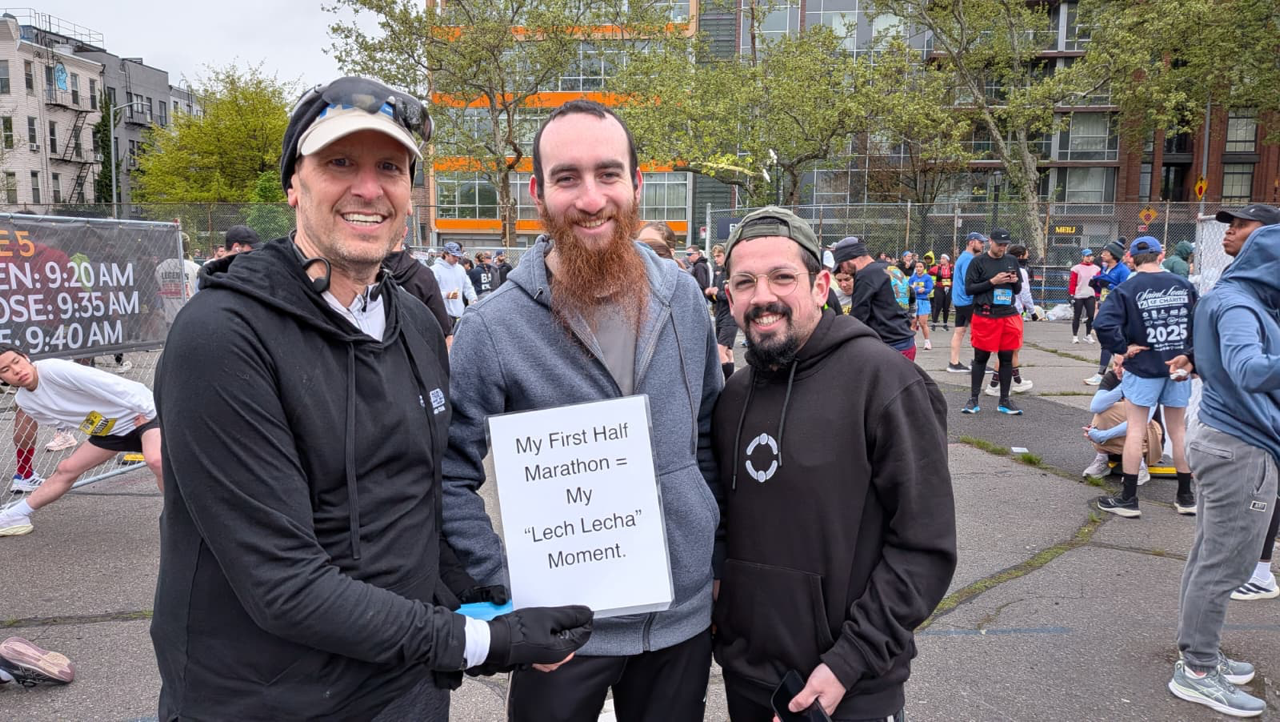
Your First Half Marathon = Your “Lech Lecha” Moment.
You’re about to do something you’ve never done before.
That puts you in the same spiritual category as every Jew who ever took a first step into the unknown.
A first half-marathon is a perfect Jewish moment because:
You don’t know exactly how it will feel
You don’t know exactly where the strength will come from
You don’t know exactly what mile 11 will do to your soul
But you’re stepping in anyway.
Stepping in takes Emunah. (faith)
There is a term called mesirut nefesh. (meh-see-ROOT NEH-fesh)
Mesirut nefesh = pushing yourself beyond your comfort zone for something meaningful
Mesirut = giving over, handing over, dedicating
Nefesh = soul, self, life-force, inner being
So, the literal meaning is “giving over oneself.”
Not dying. Not a dramatic sacrifice. Not Hollywood heroics.
In everyday Jewish life, it means: Doing something hard because it’s the right thing. Showing up when it would be easier not to, choosing meaning over comfort. Acting with heart even when you’re tired, scared, or unsure.
It’s the moment you say:
This matters enough that I’m willing to stretch beyond what I normally would.
The exact phrase mesirut nefesh does not appear in Tanach, but the concept absolutely does.
Examples:
Esther risking herself for her people
Avraham entering the furnace in Midrashic tradition
The Maccabees fighting against impossible odds
Tanach gives us the stories of mesirut nefesh, even before the phrase existed.
The Torah’s Message for Mile 1 and Mile 13, Hashem never asks for perfection. He asks for movement. The sea didn’t split until someone moved.
Blessings didn’t fall until someone tried. Holiness didn’t appear until someone took the first step.
The message I wanted to portray was that when I cross that starting line, I will remember I’m not just running a race. I’m joining a 3,000-year tradition of Jews who stepped into something new and found Hashem waiting for them within the effort. “May this first half-marathon be my own Lech Lecha — a
step into something new, something holy, and something that reveals strength I didn’t know I had.”
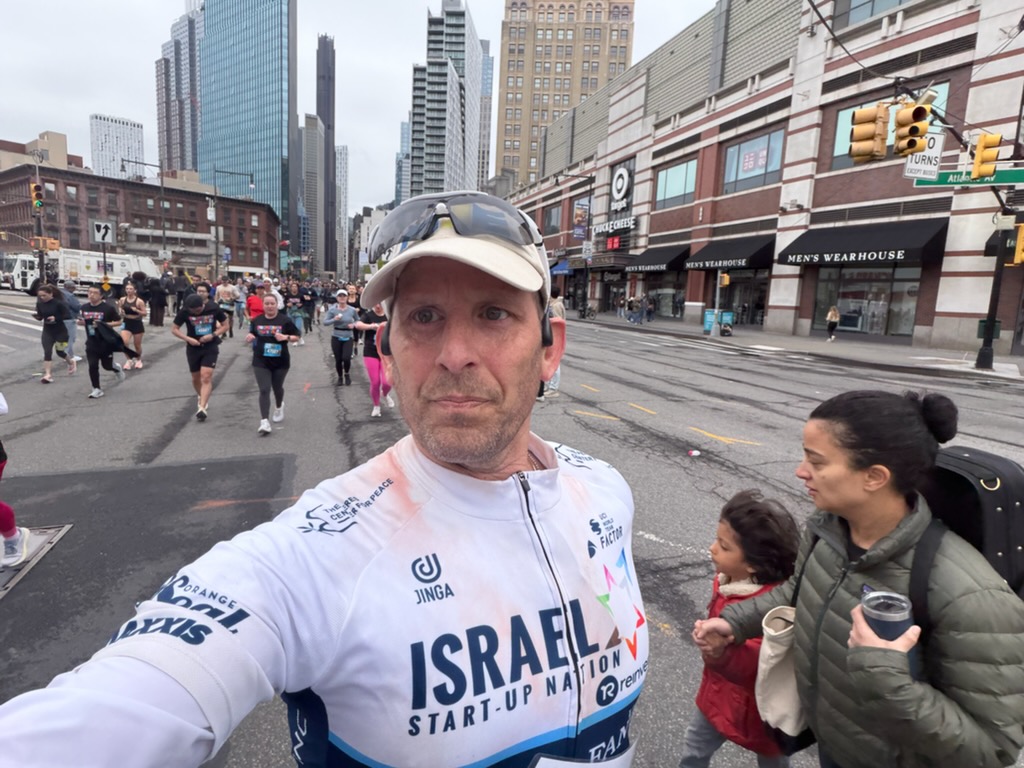
I did cross the finish line in 2:35:52, much better than I expected. Yes, I was in pain; yes, I was relieved to finish the half-marathon; and yes, I showed the entire Brooklyn community what a Jewish runner did that day. I wore a Team Israel shirt proudly; I carried the flag of Israel with me for the last 2 miles. I brought the Torah and love for Israel with me. I sent a message to the world and the crowd watching.
Am Yisrael Chai.
Written by Jonathan Brody
Executive VP Finance, New York Metro Region
Midway Jewish Center